

What Qualifies as a Wide Load? DOT Requirements Explained
The Baseline — What Qualifies as a Wide Load
Before you schedule moving heavy equipment, you need to confirm whether you are dealing with an oversize load. Once your dimensions or weight cross legal limits, your move becomes a permitted operation that requires route planning, compliance steps, and clear timing expectations.
According to the Federal Highway Administration, the maximum legal width on the National Network is 102 inches, which is 8.5 feet. Anything wider than that requires an oversize permit. This is the baseline wide load trigger in most situations, but it is not the only factor that can require oversize permits. The Federal Highway Administration also explains that states set and enforce their own height and length limits, which is why permits may be required based on your equipment configuration and the states you travel through.
When your load crosses these thresholds, you should plan for:
- An oversize load permit is issued by each state on your route
- Route review for bridge clearance, turning radius, and roadway restrictions
- Travel time limits that affect scheduling
- Escort requirements based on the oversize load dimensions
The Three Pillars of DOT Compliance for Wide Loads
Once you are moving an oversize load under permit authority, you are responsible for meeting the visible safety requirements listed on your permit. These requirements exist to warn motorists and reduce collision risk when your load takes up additional roadway space or needs extra room to turn.
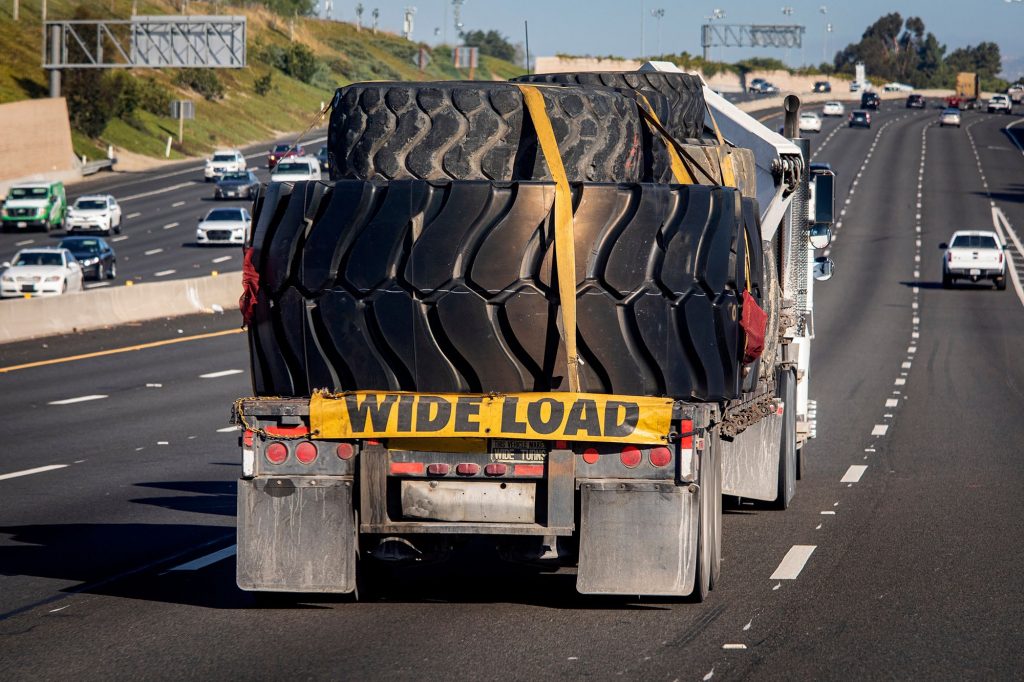
As required by many state Departments of Transportation, oversize load banners are commonly required on the front and rear of vehicles operating under oversize permits. These banners provide a quick visual warning to surrounding traffic, especially in narrow corridors and congested areas.
Flags are another frequent requirement. As required by many state Departments of Transportation, red or orange warning flags must be placed at the widest points of the oversize load to mark the full width for other drivers. Amber warning lights are also commonly required by state permit conditions. Your oversize load permit will typically specify whether rotating or flashing amber lights are required, how they must be used, and when they must be operating.
A practical compliance checklist includes:
- Oversize load banners displayed as required by the permit
- Warning flags secured at the widest points of the load
- Amber warning lights during permitted travel
- Permit documents in the cab for roadside checks
Pilot Cars and Escorts — When They’re Required
Escort requirements vary by state, but your permit will list when pilot cars are required and how many you need. In general, escort vehicles become more likely as your oversize load width increases, especially when travel involves two-lane roads, tight interchanges, or restricted corridors.
Across many state DOT programs, loads wider than 10 to 12 feet often require at least one escort vehicle, while widths over 14 feet may require two escorts and additional restrictions depending on the route. Your oversize load permit will spell out whether you need a lead car, a chase car, or both.
Escort roles are different, and understanding them helps you plan correctly:
- A lead car identifies hazards ahead, such as narrow lanes, bridge conditions, and clearance concerns.
- A chase car helps manage traffic behind the truck and supports safe lane changes.
- In some cases, height pole cars may be required when the load height is close to clearance limits.
When you are working with Equip Trucking & Warehousing, our professional heavy equipment movers ensure your escort needs are coordinated as part of the move plan, so you are not managing separate vendors across multiple states. That keeps your permitted operation organized and helps reduce delays.
Travel Restrictions and Curfews — The Hidden Delays
Oversized load moves are often delayed by restrictions tied to the permit, not the distance you need to travel. Many permits limit travel times, restrict weekend movement, and block holiday travel windows. If you do not plan around those limitations, you can lose time waiting for the next legal movement period.
Most states restrict oversize travel to daylight hours. According to guidance used by state Departments of Transportation, daylight travel is commonly defined as 30 minutes before sunrise to 30 minutes after sunset. Some states allow limited night movement for smaller permitted loads, but that must be explicitly allowed by your permit and supported by all required lighting and escort conditions.
You should also expect common permit restrictions like:
- Weekend limitations that prevent oversize load travel on Saturdays and Sundays
- Holiday restrictions that stop permitted movement during major holidays
- Commuter curfews near high traffic corridors that limit morning and evening travel
Understanding the Superload Distinction
Not every oversize load qualifies as a superload, but once you cross certain thresholds, the permitting process becomes more detailed and more time-intensive. Superload permits require more review because the state must confirm that the route can support the size and weight of the equipment being transported.
Superload thresholds vary by state, but many Departments of Transportation treat loads exceeding 16 feet in width or 200,000 pounds gross vehicle weight as superloads. Once you reach that level, the state may require engineering analysis, route surveys, and bridge review before issuing permits.
Superload permits can involve:
- Route surveys and clearance verification
- Bridge analysis and infrastructure review
- Additional escort requirements and controlled movement rules
- Longer lead times due to approval steps
Regional Expertise — Navigating PA, NJ, DE, and MD
Oversize permits are issued by individual states, not federally, which means multi-state moves require multiple permits. According to the Federal Highway Administration, state agencies manage size and weight limits, and issue permits for movements that exceed standard legal limits. Each state has its own requirements, restrictions, and approval timelines, which is why local experience matters when you move an oversize load across PA, NJ, DE, and MD.
Regional knowledge helps you avoid route problems that do not show up on a map, such as bridge limits, interchange constraints, narrow secondary roads, or permit-specific restrictions tied to local corridors. When you are dealing with oversize permits, your carrier should be managing permits, routing, and compliance together so you have one clear plan for the entire move.
If you are planning to move oversized and heavy loads in PA, NJ, DE, or MD, contact Equip Trucking & Warehousing to manage the permitting process and compliance planning, so your equipment moves safely and on schedule.